By Patrick Watson and Esmerine, for Lhasa de Sela who died in January 2010. Beautiful, and another contender for saddest song ever written.
Friday, July 06, 2012
Snow Day for Lhasa
By Patrick Watson and Esmerine, for Lhasa de Sela who died in January 2010. Beautiful, and another contender for saddest song ever written.


Sunday, June 24, 2012
Words fail
Because I was spending a fair portion of each day sitting in a chair feeding Max, we hit upon the idea of buying an iPad to enable me to read the news, answer emails, and play games; I'd been a bit sneery about the idea of iPads and couldn't see the point of them, but now I am a total convert. When Max grows up he will be completely au fait with the idea of touchscreen operation - it will probably be old hat by the time he's 5 - but it's still a wonderful novelty to me: close your fingers, or sweep the screen, and everything is available to you. Although I dislike the glacial speed of typing on a touchscreen keyboard, and there are some other slightly irksome features of the interface, it's about as good as a small portable device could be, and I find myself irritably swiping in vain now at the screen of my Kindle, which at the time of purchase, barely 12 months ago, had seemed like such a miracle.
Apple's refusal to enable Flash on its mobile devices has, indirectly, led to a strange brush with the bottom half of the internet. I can't play (Flash-powered) Facebook Scrabble on the iPad, and have had to fall back on its predecessor, once called Scrabulous back in those early Facebook days, and now forced to call itself Lexulous and make some significant changes to the gameplay, including the provision of eight letters, not seven, which at once makes the game easier and necessitates a bigger board. Just as you can with Scrabble, you can play with random, more-or-less-anonymous strangers and if you wish, leave comments for them. In hundreds of games of Scrabble, my messages from them were never much more controversial than the occasional "Good luck" or "Good evening from Auckland". 20 or so games in to Lexulous, I've encountered perplexing, albeit very different, remarks from two opponents. The first one began with a torrent of personal abuse aimed at me. At me personally, because he'd seen my picture, and thought it might be... funny? or provocative? to heap abuse on me. Maybe he was deploying abuse to make me quit and thus to take the win; maybe he was just very angry for some reason. The abuse was racist, so he wasn't the sharpest tile on the board. I wondered whether to respond, decided against it, got more abuse, maintained a dignified silence, and got my revenge by winning the game.
That was pretty vile, but manageable; the second was just plain creepy, although in hindsight our exchange was also quite funny:
Creep: Did you see my invite?
Me: No, Lexulous can be a bit funny like that, messages don't get through.
Creep: I asked for players who wanted to have a naughty side bet on the outcome of the game.
Me: [Silence as I try to work out how to get out of this gracefully]
Creep: So, are you up for it?
Me: No thanks.
Creep: [Quits game in fit of pique and takes the loss]
Apple's refusal to enable Flash on its mobile devices has, indirectly, led to a strange brush with the bottom half of the internet. I can't play (Flash-powered) Facebook Scrabble on the iPad, and have had to fall back on its predecessor, once called Scrabulous back in those early Facebook days, and now forced to call itself Lexulous and make some significant changes to the gameplay, including the provision of eight letters, not seven, which at once makes the game easier and necessitates a bigger board. Just as you can with Scrabble, you can play with random, more-or-less-anonymous strangers and if you wish, leave comments for them. In hundreds of games of Scrabble, my messages from them were never much more controversial than the occasional "Good luck" or "Good evening from Auckland". 20 or so games in to Lexulous, I've encountered perplexing, albeit very different, remarks from two opponents. The first one began with a torrent of personal abuse aimed at me. At me personally, because he'd seen my picture, and thought it might be... funny? or provocative? to heap abuse on me. Maybe he was deploying abuse to make me quit and thus to take the win; maybe he was just very angry for some reason. The abuse was racist, so he wasn't the sharpest tile on the board. I wondered whether to respond, decided against it, got more abuse, maintained a dignified silence, and got my revenge by winning the game.
That was pretty vile, but manageable; the second was just plain creepy, although in hindsight our exchange was also quite funny:
Creep: Did you see my invite?
Me: No, Lexulous can be a bit funny like that, messages don't get through.
Creep: I asked for players who wanted to have a naughty side bet on the outcome of the game.
Me: [Silence as I try to work out how to get out of this gracefully]
Creep: So, are you up for it?
Me: No thanks.
Creep: [Quits game in fit of pique and takes the loss]
Friday, June 08, 2012
England's dreaming
In 1977 I was chosen to be a flower girl for the annual village gala.
This was always considered an honour (though I was probably quite
randomly selected from the small pool of 8 year old girls in the
village) but in the year of the Queen's Silver Jubilee, it was
supposedly particularly special, although the day itself was the same as
any other gala day in a small Scottish village: wearing pretty dresses
(green with white hearts) made by our mothers, two of us followed the
impossibly beautiful, sophisticated 12 year old Gala Queen solemnly,
with a trademark halting step, as we travelled the tiny distance from
the village's west to the east, first on the back of a lorry waving at
handfuls of people on pavements, before ascending to a makeshift stage
for the "coronation" ceremony.
There were "teas" and a disappointing gala bag with a stale pie; there was a welly throwing competition, and livestock on display; I don't remember much else except the crisp feel of new dress against my neck, and sitting ceremoniously in place for a long time, and clutching my commemorative giant 25p Jubilee coin, which lived for years thereafter in a tiny flowery purse on the basis that it might one day be worth something. An increasingly decrepit Jubilee mug sat on our cup shelf for years, guiltily preferred by me to my mum's hand-thrown cups on the basis that it was shop- bought.
I was only dimly aware of the Queen and the meaning of royalty; it was only later, during the eighties, that I developed a proper sense of outrage at the inequity of inherited position and the parasites who take advantage of it. But 1977 was a year in which there was at least a semblance of objection to the status quo; in Scotland, celebrations would always have been more muted, but for right-minded adolescents the Queen was a target figure, someone to be mocked and ridiculed, and possibly the most memorable punk record of all, God Save The Queen, was released as a reaction to the farrago of the Silver Jubilee. "You ain't no human being", "there is no future in England's dreaming"; these words may have been written by the much older Malcolm McLaren but snarled by Johnny Rotten, he seems to speak for a disaffected generation.
I have to declare a lack of interest; as an eight year old, if I had any awareness of punk, it seemed frightening and discordant. But it's hard not to long for the nihilistic clarity of a hyper-sarcastic "we mean it, ma'am" in the face of the outpouring of sycophancy that has been evident, even from afar, on the occasion of the Queen's Diamond Jubilee.
There were "teas" and a disappointing gala bag with a stale pie; there was a welly throwing competition, and livestock on display; I don't remember much else except the crisp feel of new dress against my neck, and sitting ceremoniously in place for a long time, and clutching my commemorative giant 25p Jubilee coin, which lived for years thereafter in a tiny flowery purse on the basis that it might one day be worth something. An increasingly decrepit Jubilee mug sat on our cup shelf for years, guiltily preferred by me to my mum's hand-thrown cups on the basis that it was shop- bought.
I was only dimly aware of the Queen and the meaning of royalty; it was only later, during the eighties, that I developed a proper sense of outrage at the inequity of inherited position and the parasites who take advantage of it. But 1977 was a year in which there was at least a semblance of objection to the status quo; in Scotland, celebrations would always have been more muted, but for right-minded adolescents the Queen was a target figure, someone to be mocked and ridiculed, and possibly the most memorable punk record of all, God Save The Queen, was released as a reaction to the farrago of the Silver Jubilee. "You ain't no human being", "there is no future in England's dreaming"; these words may have been written by the much older Malcolm McLaren but snarled by Johnny Rotten, he seems to speak for a disaffected generation.
I have to declare a lack of interest; as an eight year old, if I had any awareness of punk, it seemed frightening and discordant. But it's hard not to long for the nihilistic clarity of a hyper-sarcastic "we mean it, ma'am" in the face of the outpouring of sycophancy that has been evident, even from afar, on the occasion of the Queen's Diamond Jubilee.
Sunday, April 22, 2012
My kind of town
Max is eating well, so I'm often to be found sitting in the same chair and I'm getting through lots of books - thank goodness for excellent Australian libraries. More by accident than by design, I read three books set in New York one after another.
The first, Pariah by Bob Fingerman, met my deep-seated need to read about the forthcoming zombie apocalypse so much more effectively than the current, colossally disappointing AMC series The Walking Dead ever could (although to be fair, I'm still persisting with the latter, two seasons in, in the vain hope it will lift its game from being a soap opera with the occasional zombie). In Pariah, people actually ask the questions that will need asking in the event of the dead rising: how did this happen? How will we survive? What will happen to the zombies over time? What's the best place to hole up? What's the point? A motley group of previous strangers are starving to death in a barricaded New York tenement, tantalisingly close to the doors of a supermarket, a small, unbridgeable distance away and guarded by flesh-eating zombies in apparently good health. Then someone wanders by in the street whom the zombies don't want to eat ...
The second book is more ambitious and in some ways more satisfying, being rooted in all-too-readily imaginable reality: The Submission by Amy Waldman reconstructs the process of choosing the 9/11 memorial for the site of the Twin Towers but imagines a scenario where the winning design, chosen anonymously from thousands of submissions, was created by a Muslim architect. Before the selection has been announced to the public, the selection committee is torn apart by the resulting conflict. The book was written before the controversy about the proposed Muslim cultural centre at Ground Zero, but eerily foreshadows it. The characters are complex, and beautifully drawn with their frustratingly dogmatic thoughts and opinions, never quite behaving the way they should, and never quite making the matter an easy one.
The last book, which I finished this morning, is a superior detective novel set in Lower Manhattan, Lush Life by Richard Price. It's partly a collection of observations from New York life and acute character sketches, and partly a traditional police procedural written with a keen sense of empathy. It's about wasted dreams and wasted lives, as in some way the other two books also are; apart from that they have nothing else in common except the city where they're set.
The first, Pariah by Bob Fingerman, met my deep-seated need to read about the forthcoming zombie apocalypse so much more effectively than the current, colossally disappointing AMC series The Walking Dead ever could (although to be fair, I'm still persisting with the latter, two seasons in, in the vain hope it will lift its game from being a soap opera with the occasional zombie). In Pariah, people actually ask the questions that will need asking in the event of the dead rising: how did this happen? How will we survive? What will happen to the zombies over time? What's the best place to hole up? What's the point? A motley group of previous strangers are starving to death in a barricaded New York tenement, tantalisingly close to the doors of a supermarket, a small, unbridgeable distance away and guarded by flesh-eating zombies in apparently good health. Then someone wanders by in the street whom the zombies don't want to eat ...
The second book is more ambitious and in some ways more satisfying, being rooted in all-too-readily imaginable reality: The Submission by Amy Waldman reconstructs the process of choosing the 9/11 memorial for the site of the Twin Towers but imagines a scenario where the winning design, chosen anonymously from thousands of submissions, was created by a Muslim architect. Before the selection has been announced to the public, the selection committee is torn apart by the resulting conflict. The book was written before the controversy about the proposed Muslim cultural centre at Ground Zero, but eerily foreshadows it. The characters are complex, and beautifully drawn with their frustratingly dogmatic thoughts and opinions, never quite behaving the way they should, and never quite making the matter an easy one.
The last book, which I finished this morning, is a superior detective novel set in Lower Manhattan, Lush Life by Richard Price. It's partly a collection of observations from New York life and acute character sketches, and partly a traditional police procedural written with a keen sense of empathy. It's about wasted dreams and wasted lives, as in some way the other two books also are; apart from that they have nothing else in common except the city where they're set.
Saturday, April 07, 2012
Box of tricks
At the end of this year I will have lived away from the UK for 10 years. In that time, a new tradition has developed whereby my Mum and my sister send me, for birthdays and Christmas, a magnificent parcel filled with individually wrapped items that can only be bought in the UK or, more specifically, in Scotland. These have in the past consisted of, in no particular order (and without suggesting that I don't want surprises next time):
1. Scottish Blend teabags
"Specially blended for Scottish water", and with an accompanying sarcastic advert alluding to the fact that it never stops raining in Scotland: these possibly fraudulent (will they only work with Scottish water?), but nonetheless excellent teabags have frequently been smuggled through customs in Australia for me. They really do taste better than any other teabag. Even with (previously) inferior Hong Kong and (now) Australian water.
2. Shortbread House of Edinburgh shortbread
I first encountered this peerless brand when I was working in Morningside in a wholefood shop called Cornucopia. Rich, buttery, and absolutely irresistible. The website offers all sorts of perversions of the original idea (cinnamon and demerara? "Christmas"?), but in this I am a puritan: it has to be plain. And it's not just me who says so; Shortbread House's original recipe has won nine of the prestigious Gold Great Taste Awards.
3. Protect and Perfect
Boots the Chemist is probably the best chainstore in the UK, a fact you don't really appreciate until you leave and find yourself searching the dispiriting recesses of inferior pharmacies in vain for the sheer variety of products available in even the meanest, tiniest Boots. Boots' own brand is pretty reliable. When Boots launched Protect and Perfect a BBC science programme (clearly a peer-reviewed reliable source) declared that it actually reduced wrinkles. From my personal experience, this may not be true, and the stuff does smell strongly chemical; but my skin feels quite silky afterwards, and you can't ask for much more than that. P&P gets a kicking from some sources (click here to see all your favourite products mercilessly critiqued, except for, oh, products created by the site's founder).
4. Thorntons Brazil Nut Special Toffee
No more needs to be said.
5. Soap & Glory: The Scrub of Your Life
Soap & Glory products are packaged in retro pink, with graphic imagery and concepts (rotten puns) which are possibly shamelessly stolen from Benefit, but it's true what it says on the tube: this is a near perfect scrub which smells great and leaves the skin feeling very, very soft.
6. Bio-Oil
This is a relative newcomer which I started using when I was pregnant and have been using ever since, not only on my distorted stomach (before and after) but also on my face. It smells faintly but not powerfully plasticky (repellent though that may sound, it's pleasant; it reminds me of the smell of new dolls) and is as slick as you like. It's supposedly good for scars. Like all similar products I think the benefits of regular massage may have more to do with it, but I've been using it just for the sheer pleasure of application.
Believe it or not I'm regularly approached (via email) by PR people asking if I'll promote something on one of my blogs (a fashion designer, a restaurant, a jewellery range). I always say no: if I'm asked to promote something in some sort of quid pro quo arrangement, I can't be neutral, and unless I genuinely like something without being asked to, I couldn't promote it. This is the closest I'd ever get to promoting anything, and that's only because this is what arrives in my magic box.
1. Scottish Blend teabags
"Specially blended for Scottish water", and with an accompanying sarcastic advert alluding to the fact that it never stops raining in Scotland: these possibly fraudulent (will they only work with Scottish water?), but nonetheless excellent teabags have frequently been smuggled through customs in Australia for me. They really do taste better than any other teabag. Even with (previously) inferior Hong Kong and (now) Australian water.
2. Shortbread House of Edinburgh shortbread
I first encountered this peerless brand when I was working in Morningside in a wholefood shop called Cornucopia. Rich, buttery, and absolutely irresistible. The website offers all sorts of perversions of the original idea (cinnamon and demerara? "Christmas"?), but in this I am a puritan: it has to be plain. And it's not just me who says so; Shortbread House's original recipe has won nine of the prestigious Gold Great Taste Awards.
3. Protect and Perfect
Boots the Chemist is probably the best chainstore in the UK, a fact you don't really appreciate until you leave and find yourself searching the dispiriting recesses of inferior pharmacies in vain for the sheer variety of products available in even the meanest, tiniest Boots. Boots' own brand is pretty reliable. When Boots launched Protect and Perfect a BBC science programme (clearly a peer-reviewed reliable source) declared that it actually reduced wrinkles. From my personal experience, this may not be true, and the stuff does smell strongly chemical; but my skin feels quite silky afterwards, and you can't ask for much more than that. P&P gets a kicking from some sources (click here to see all your favourite products mercilessly critiqued, except for, oh, products created by the site's founder).
4. Thorntons Brazil Nut Special Toffee
No more needs to be said.
5. Soap & Glory: The Scrub of Your Life
Soap & Glory products are packaged in retro pink, with graphic imagery and concepts (rotten puns) which are possibly shamelessly stolen from Benefit, but it's true what it says on the tube: this is a near perfect scrub which smells great and leaves the skin feeling very, very soft.
6. Bio-Oil
This is a relative newcomer which I started using when I was pregnant and have been using ever since, not only on my distorted stomach (before and after) but also on my face. It smells faintly but not powerfully plasticky (repellent though that may sound, it's pleasant; it reminds me of the smell of new dolls) and is as slick as you like. It's supposedly good for scars. Like all similar products I think the benefits of regular massage may have more to do with it, but I've been using it just for the sheer pleasure of application.
Believe it or not I'm regularly approached (via email) by PR people asking if I'll promote something on one of my blogs (a fashion designer, a restaurant, a jewellery range). I always say no: if I'm asked to promote something in some sort of quid pro quo arrangement, I can't be neutral, and unless I genuinely like something without being asked to, I couldn't promote it. This is the closest I'd ever get to promoting anything, and that's only because this is what arrives in my magic box.
Sunday, April 01, 2012
O sweet spontaneous
O sweet spontaneous
earth how often have
the
doting
fingers of
prurient philosophers pinched
and
poked
thee
,has the naughty thumb
of science prodded
thy
beauty .how
oftn have religions taken
thee upon their scraggy knees
squeezing and
buffeting thee that thou mightest conceive
gods
(but
true
to the incomparable
couch of death thy
rhythmic
lover
thou answerest
them only with
spring)
e.e. cummings
For some reason this poem was going through my head when I was shivering in the (astonishingly cold) operating theatre undergoing a c-section. I was in labour (unimaginable pain, waves of it), for minutes, hours (all day): the closest parallel which occurred to me at the time, in my drugged state, was that I was being oppressed by an enormous ceiling fan beating ceaselessly overhead, Apocalypse-Now style, delivering layers of agony). Birth by c-section, the crucial part, takes 5 minutes; the longest part is being stitched up again. When the baby was removed, I could feel a strange stretching and tugging sensation. I think I must have been deliriously equating the poem with the reality: the doting fingers of prurient doctors pinched and poked me so I answered them only with Max.
Saturday, March 31, 2012
Jocky Wilson Said


One of the first LPs my sister and I bought together (by the cliched but nonetheless effective methodology of saving up our pocket money) was Dexys Midnight Runners' debut album, Searching For the Young Soul Rebels (1980). Listening to it again, it's stood up very well; it's full of humour, intelligence and acute observations as well as the distinctive sounds of a kick ass horn section. Classic songs on the album include "Geno", still a great and curiously moving song; and the hyperarticulate "There There My Dear".
One song in particular, Thankfully Not Living in Yorkshire It Doesn't Apply, reminds me of dancing in the livingroom with a guy we called Randy Andy, a friend of my mum's in the category normally known as "freak", laughing with sheer joy because he was such a funky mover. The song contains the inimitable line "Lord have mercy on me, keep me away from Leeds". Which at the time, based on a complete absence of evidence, we deduced was about the Yorkshire Ripper.
Dexys went through some odd incarnations after this northern soul, teams-that-meet-in-caffs period: moving from serious, rather po-faced men in black clad in woollen hats to embrace the excesses of the day. Who can forget the risible dungarees circa "Come on Eileen" and the questionable hair? To the jaundiced eye, the age old problem: they seemed to have sold out as they got more popular. Their appearance on Top of the Pops for Jacky Wilson Said was notable for the pictures of tubby Scottish darts player Jocky Wilson displayed in error by BBC props staff. Kevin Rowland went through several breakdowns and ended up heavily made up and wearing a dress on the cover of his solo album My Beauty. Not that there's anything wrong with this, of course; better a dress than dungarees.
Jocky Wilson, March 22 1950 - March 24, 2012
Sunday, February 12, 2012
At the top of the circus
The adaptation of Tinker Tailor Soldier Spy is a remarkable film, a million miles away from the glib cynical story package that is Hugo, and hence nowhere near the running to win sheafs of Oscars (although Gary Oldman, pictured in this link in a rather disturbingly anodyne series of portraits of the nominees on the Oscars' official website, is nominated as Actor In A Leading Role; it's also up for Music (Original Score) and Writing (Adapted Screenplay). FYI, Transformers (Dark of the Moon), is also up for three).
Recent anecdotal evidence reveals twentysomethings' verdict on Blade Runner, arguably one of the best films ever made, as having been that it's "slow" and "boring". "Tinker Tailor..." stands no chance against this sort of ruthlessness: if you like your excitement packaged and delivered to you in two-minute bursts, go and see "Mission: Impossible—Ghost Protocol" (itself, particularly in an iMAX cinema, an incredibly enjoyable, albeit ultimately of course completely shallow, experience).
On the other hand, if you want to see beautifully restrained performances, particularly from Gary Oldman, about whom John le Carré apparently said that his whole acting life has been leading up to this role: to being able to play it with such masterful understatement, then you must see this film. You can smell the 1970s emanating from the screen. The music is essential but unobtrusive. And not a single gesture is either wasted or hysterical.
Saturday, February 11, 2012
Here comes the fall
For the last week I've been on maternity leave, prefaced by that holiday feeling where I look at my desk and the papers thereon, and feel certain I'm never coming back. I've slipped into it slowly, still feeling that I ought to be paying attention to emails, and still feeling that heartfelt sense of anguish when I hear we've lost business to the competition, as well as being irked by office politics and not being copied in (I still have to run this business when I go back...). I think I may still be in denial about what is about to happen, but now we have a timetable: because of the gestational diabetes, I'm not going over the due date. My mum arrives on Tuesday and I check in to the hospital on Sunday, unless he decides to arrive sooner.
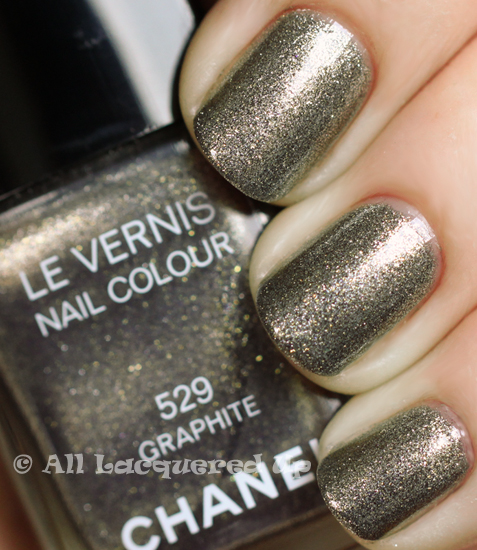
One of the other pitfalls of pregnancy has been visited upon me: falling over in the street. More specifically, it was Sydney Road, on the way back from the IGA supermarket, and without warning, in awful slow motion, I tripped and dived to the pavement. I took most of my weight on the heels of my hands, and apart from scuffing my toenail varnish (Graphite, in case you wondered), the only real injury suffered was to my already-shredded dignity. Falling over is surprisingly common and all the (mostly terrible) baby books mention it: the result of an altered centre of gravity and heightened clumsiness (in my case).
To add to the humiliation, a helpful drunk raced across the road from the pub, dodging the traffic of Sydney Road with scant regard for his own safety, grabbed me by the arm and tried to haul my not inconsiderable frame off the pavement.
One of the other pitfalls of pregnancy has been visited upon me: falling over in the street. More specifically, it was Sydney Road, on the way back from the IGA supermarket, and without warning, in awful slow motion, I tripped and dived to the pavement. I took most of my weight on the heels of my hands, and apart from scuffing my toenail varnish (Graphite, in case you wondered), the only real injury suffered was to my already-shredded dignity. Falling over is surprisingly common and all the (mostly terrible) baby books mention it: the result of an altered centre of gravity and heightened clumsiness (in my case).
To add to the humiliation, a helpful drunk raced across the road from the pub, dodging the traffic of Sydney Road with scant regard for his own safety, grabbed me by the arm and tried to haul my not inconsiderable frame off the pavement.
Sunday, January 08, 2012
Charmless garments: 6

Number 6 on the list, and what took me so long: animal prints (albeit this is, perhaps, a category error, a print not being a garment). They've been fashionable of late: I was reminded of my distaste by an email from net-a-porter about "this season's style safari". I've never been into prints all that much, but I will occasionally wear a discreet pattern of some sort; where I emphatically draw the line, though, is with regard to animal prints. The horror is perhaps borne of an instinctive dislike of the idea of wearing the skin of an exotic animal, mingled with my suspicion of those who opt for ersatz when they wouldn't tolerate the real thing (vegetarian bacon, I'm looking at you); but the overall impression of animal prints, no matter how expensively rendered, is all just a bit too Pat Butcher for my taste. (It also appears to be mandatory to adopt a sulky expression when wearing them, QED by the above picture, although Pat, bless 'er 'eart, is always smiling in leopardskin.)
The grandmother of a four year old girl of my acquaintance gave her a "sparkly t-shirt and leopardskin skirt" for Christmas. That this was seen as grossly inappropriate by everyone except (presumably) the grandmother illustrates the biggest problem with animal prints: after all it could be argued that Pat Butcher invests them with some sort of despite-everything dignity. However, they also appear to be the universal tacky garb of underwhelming would-be sexpots and hookers. Not, then, a look for a four year old.
Friday, January 06, 2012
Dreamer

Eve Arnold, April 21, 1912 – January 4, 2012. She was most famous for taking photographs of Marilyn Monroe, but this is one of my favourites. "It's the hardest thing in the world to take the mundane and try to show how special it is."
Wednesday, December 28, 2011
Stop making scents
One other unexpected side-effect of pregnancy has been the development of a superhuman sense of smell, like a dog. I've always had a good sense of smell, but now it has become preternaturally acute, to the extent that I could tell without turning my head that the man sitting next to me on a recent early flight to Canberra had not brushed his teeth that morning; that the person behind me on the train home from work had just had a cigarette; that the woman who got into the lift in my office building at the end of the week had applied Chanel Allure that day; that one of my colleagues had just enjoyed a cup of coffee; and that D had been cutting coriander from the garden as soon as he entered the room.
As with my other obscure skills (I can tell straight away if someone has had their hair cut; I'm very good at writing questions for pub quizzes; I can recognise an East Kilbride accent; and I can quote entire stanzas of poetry I learned at school as well as fragments of quotes from all over the place), one day I'll be able to make money out of this.
As with my other obscure skills (I can tell straight away if someone has had their hair cut; I'm very good at writing questions for pub quizzes; I can recognise an East Kilbride accent; and I can quote entire stanzas of poetry I learned at school as well as fragments of quotes from all over the place), one day I'll be able to make money out of this.
Monday, December 19, 2011
Sodade
From Miss Perfumado by Cape Verdean singer Cesária Évora (27 August 1941 – 17 December 2011).
Sodade
Quem mostra' bo
Ess caminho longe?
Quem mostra' bo
Ess caminho longe?
Ess caminho
Pa Sao Tomé
Sodade sodade
Sodade
Dess nha terra Sao Nicolau
Si bo 'screve' me
'M ta 'screve be
Si bo 'squece me
'M ta 'squece be
Até dia
Qui bo voltà
Sodade sodade
Sodade
Dess nha terra Sao Nicolau
Longing
Who will show you
this distant way?
Who will show you
this distant way?
This way
to Sao Tomé?
The longing, the longing
The longing
For this land of mine, Sao Nicolau
If you write me a letter
I will write you back
If you forget me
I will forget you
Until the day
You come back
Sunday, December 18, 2011
The kick inside
There are a few side-effects of pregnancy which I didn't know about before it happened to me:
- Insomnia. Sleep's never really been a problem for me before, even during particularly stressful periods at work, but since I've been pregnant, sleep can be elusive: often I'm awake at 3am, thoughts going round my head as insistently as a headache, with no apparent end in sight. (It's the hormones.)
- Kicking. Ah, what a delicate image! It's like butterflies, they (the books) said. No, it's not; it's like having a trampoline inside you with someone periodically jumping on it. Much as I enjoy the signs that he (for it's a boy) is active, and the sheer weirdness of the sensation, let's not be sentimental about it.
- Patronising language. According to medical staff (with a few rare exceptions), all pregnant women are "girls"; all doctors are male, and all nurses and midwives are female. The baby is "baby". Sometimes I have to remind myself it's not the 1950s.
- Guilt-trip marketing. It would be possible to spend a quite mind-boggling amount of money on equipment, and boy is there a lot of it. There are entire stores (out-of-town, of course) devoted to every little thing you may possibly need for your child, and a whole lot that you don't. And a lot of the marketing is couched in safety terms. Buy this, or "baby" will suffer!
- The demon internet. Not that I didn't already know this, but if you have any concerns about anything medical whatsoever, the last helpful place to look is an internet forum. Here, you will almost certainly discover that whatever you are worried about is decidedly abnormal, and will lead in the most terrible directions, all based on what experts (women who have had a baby themselves) are saying.
- Gestational diabetes. After a two hour test which involves drinking a glucose juice so horribly sweet I could feel it stripping my tooth enamel, and three blood tests, I've been diagnosed as a borderline case (my age, 43, being the major contributing factor) and am currently on a military-style regime of blood sugar self-testing and strictly timed, weighed and measured meals. If this fails, it's injecting insulin for me. (It's the hormones.)
Saturday, December 03, 2011
Shine on
In summer 1988, at the end of my first year at Glasgow University, my boyfriend at the time, who was a medical student, got me a job at Glasgow Royal Infirmary as a domestic assistant (AKA cleaner). "The Royal" was a forbidding, time-blackened Victorian building between the M8 motorway and Alexandra Parade, complete with turrets and long dusty corridors; through the open windows you could see the beautiful, mysterious Necropolis in the distance and could sometimes hear the faint triumphalist piping sounds of Orange marches in the east end streets. A private company had the contract; the domestics, who were almost all women, had to wear a pale purple A-line uniform with white piping. Many of them were hard-bitten women in their forties who instinctively distrusted outsiders; unfortunately I ticked a lot of the wrong boxes, being a student, "English", studying for a law degree, and taking their jobs; I overheard one younger woman hissing to another "I hate that lassie!" as I left the locker room, and another took great pains to tell me that she couldn't afford Christmas presents for the weans this year. Most of them, though, were decent enough towards me under the circumstances; you'd be assigned to a more experienced domestic on each ward, and though a lot of them would set me to Herculean tasks such as cleaning the metal framework under patients' beds, a job clearly done so rarely that it looked like no one had ever attempted it before, and then sneak off to the "domestic services office" (mop cupboard) to stretch out the windows for an illicit fag, I had fun with some of them too and they taught me a lot.
That summer, I learned how popular Neighbours and Home and Away were: they were shown back to back on the BBC and ITV respectively, at lunchtime and just before dinner, and in every ward, even the terrible sweet-smelling burns ward where there were people in pretty bad shape, those who could walk walked, and those in wheelchairs were wheeled, along to the TV room at the end of the ward to watch every single episode, repeats and all. I enjoyed wheeling around the "maxpax machine" and asking patients if they wanted a cup of tea, coffee, hot chocolate or Bovril (a surprising number opted for the latter). I liked talking to the patients. But most of all I loved the glorious moment of clocking myself off at the end of a shift because I really didn't enjoy the atmosphere of fear and distrust, and in some cases bullying from senior managers, that seemed to be endemic within that company. Domestics were regarded by all other hospital workers as being right at the bottom of the food chain and in many cases treated accordingly. Also, the pay was pretty terrible; small wonder that the domestics seemed unhappy. They were doing a pretty important job, but being screwed by the company that employed them and looked down upon by everyone else.
I was pretty glad when the summer ended and I went back to university; I never worked there again, though they offered me a job the following summer. Some skills have stayed with me from that time, though: I can mop like a professional, make a floor shine with the unwieldiest of buffing machines, and leave a sink as clean as new. I also learned to appreciate the unseen, low paid workers who make things clean for everyone else.
That summer, I learned how popular Neighbours and Home and Away were: they were shown back to back on the BBC and ITV respectively, at lunchtime and just before dinner, and in every ward, even the terrible sweet-smelling burns ward where there were people in pretty bad shape, those who could walk walked, and those in wheelchairs were wheeled, along to the TV room at the end of the ward to watch every single episode, repeats and all. I enjoyed wheeling around the "maxpax machine" and asking patients if they wanted a cup of tea, coffee, hot chocolate or Bovril (a surprising number opted for the latter). I liked talking to the patients. But most of all I loved the glorious moment of clocking myself off at the end of a shift because I really didn't enjoy the atmosphere of fear and distrust, and in some cases bullying from senior managers, that seemed to be endemic within that company. Domestics were regarded by all other hospital workers as being right at the bottom of the food chain and in many cases treated accordingly. Also, the pay was pretty terrible; small wonder that the domestics seemed unhappy. They were doing a pretty important job, but being screwed by the company that employed them and looked down upon by everyone else.
I was pretty glad when the summer ended and I went back to university; I never worked there again, though they offered me a job the following summer. Some skills have stayed with me from that time, though: I can mop like a professional, make a floor shine with the unwieldiest of buffing machines, and leave a sink as clean as new. I also learned to appreciate the unseen, low paid workers who make things clean for everyone else.
Saturday, November 19, 2011
The lotus eaters
Melbourne's apparently known as Bleak City, and it's true, it's been raining incessantly all day: but today there was a little hotspot of bright colours, excitement, pop music and, most importantly, excessive consumption at Melbourne Central Mall, beneath the towering, incongruous edifice of the old lead pipe and shot factory. Yes, the CP Biggest Eater Competition was in town.

First up was a strangely innocent performance by a Chinese girl band who apparently are currently no. 1 in the Chinese pop charts.


But then came the main event. The ravening crowd were expertly whipped into a frenzy by presiding MC Sam, who with pinpoint accuracy described the contest to come as being "the battleground on which God and Lucifer wage war for the souls of men" and, realistically, as being the most democratic of contests. There were amateurs participating, but they were, frankly, amateurs; all eyes were on the professionals.
The wontons themselves looked harmless enough, and tasted pretty good:

But in a competition to eat as many as you can, all notions of these wontons as substance, or as food, must presumably be banished in order to get as many past the tonsils as possible.


 All three professionals, with the eventual winner on the far right. 307 wontons down, and make-up still largely intact.

First up was a strangely innocent performance by a Chinese girl band who apparently are currently no. 1 in the Chinese pop charts.


But then came the main event. The ravening crowd were expertly whipped into a frenzy by presiding MC Sam, who with pinpoint accuracy described the contest to come as being "the battleground on which God and Lucifer wage war for the souls of men" and, realistically, as being the most democratic of contests. There were amateurs participating, but they were, frankly, amateurs; all eyes were on the professionals.
The wontons themselves looked harmless enough, and tasted pretty good:

But in a competition to eat as many as you can, all notions of these wontons as substance, or as food, must presumably be banished in order to get as many past the tonsils as possible.


Ain't it hard just to live
Written by Randy Newman in the late 1970s, Baltimore is a definite contender for saddest song ever written. I've never heard Newman's original version, but Nina Simone covered the song for the eponymous 1978 album and her version is sometimes almost unbearable: the word "Baltimore" is a moan and a lament, the other lines infused with world-weary sadness. It's a beautiful song, and the imagery is simple and stark:
Beat-up little seagull
On a marble stair
Trying to find the ocean
Looking everywhere
Sunday, October 23, 2011
Computer love
I first played what could be identified as a computer game in the 1980s. It was Pong, which made a distinct "bop" sound when the ball hit the paddle. I was a bit contemptuous of it, but not long after that I played a few dungeons-and-dragons style games, using the C-prompt, where you could choose one of several outcomes. I remember standing helplessly watching someone trying to resolve a problem where the computer wasn't responding, and wondering whether I would ever understand how these things worked.
The first game I got really excited about was Wolfenstein 3D. In the early 1990s I played a lot of Wolfenstein, although the crude graphics had the effect of making me travel sick (run down a corridor, look left, look right, shoot a Nazi guard, go into a room, turn 360°, extract a symbol hidden behind a brick, run down a corridor... I lasted about 5 minutes before I started feeling queasy). My next obsession was Lemmings on an early Apple Mac, followed by SimCity (which is still a pretty damn good game, especially the version where you can make city transport decisions such as deciding where the bus stops go, and building ferry ports and subway systems with real-time data on how many Sims are using the system). After that, I played Shadows of the Empire on the N64: the first truly inspiring game I'd ever experienced (I loved the attention to detail and continuity; the way that, walking along a treacherous cliff-edge path to accomplish one task, I could see the moving parts of the next challenge, already engaging far below; and the experience of running round a junkyard with the droid IG-88 in clattering, menacing pursuit was genuinely terrifying).
I'm still playing, but I'm very particular: despite an early attachment to Wolfenstein, a lot of the first person shooter games never really appealed to me; despite the fact that graphics are a lot more smooth and sophisticated than they were when I first started playing, it's the format most likely to make me feel sick: run down a corridor, look left, look right..., and more than that, unless very well done it can be repetitive and dull. I have an abiding dislike of games set on spaceships, "boss" fights (engaging in pointless battle with a large, relentless foe armed with tentacles/fire/thorns/stingers, who has a tiny Achilles heel that you have to die numerous times to discover), fights with robots, and post-apocalyptic landscapes. I don't like my characters to be as thick as mince, and sadly a lot of them are. My favourite weapon is the sniper rifle, followed closely by the shotgun. I like to be behind my character rather then looking through his/her eyes (third-person shooter) and prefer my opponents to be human, or almost human (I don't mind engaging with the undead). I want a proper story in a believable, if exotic, setting: essentially, Resident Evil and Uncharted are perfect games for me. Both even have credible female characters who aren't afraid to wield a gun and never get their kit off. On that last point, it seems pretty clear that most games are designed for men; games specifically aimed at women have tended to be pretty contemptible (with an emphasis on romance, pets, or shopping). I'm perfectly happy to shoot people (hence the tag for this post, "I know how this makes me look"). I know it's not real. And I don't need to be patronised.
The first game I got really excited about was Wolfenstein 3D. In the early 1990s I played a lot of Wolfenstein, although the crude graphics had the effect of making me travel sick (run down a corridor, look left, look right, shoot a Nazi guard, go into a room, turn 360°, extract a symbol hidden behind a brick, run down a corridor... I lasted about 5 minutes before I started feeling queasy). My next obsession was Lemmings on an early Apple Mac, followed by SimCity (which is still a pretty damn good game, especially the version where you can make city transport decisions such as deciding where the bus stops go, and building ferry ports and subway systems with real-time data on how many Sims are using the system). After that, I played Shadows of the Empire on the N64: the first truly inspiring game I'd ever experienced (I loved the attention to detail and continuity; the way that, walking along a treacherous cliff-edge path to accomplish one task, I could see the moving parts of the next challenge, already engaging far below; and the experience of running round a junkyard with the droid IG-88 in clattering, menacing pursuit was genuinely terrifying).
I'm still playing, but I'm very particular: despite an early attachment to Wolfenstein, a lot of the first person shooter games never really appealed to me; despite the fact that graphics are a lot more smooth and sophisticated than they were when I first started playing, it's the format most likely to make me feel sick: run down a corridor, look left, look right..., and more than that, unless very well done it can be repetitive and dull. I have an abiding dislike of games set on spaceships, "boss" fights (engaging in pointless battle with a large, relentless foe armed with tentacles/fire/thorns/stingers, who has a tiny Achilles heel that you have to die numerous times to discover), fights with robots, and post-apocalyptic landscapes. I don't like my characters to be as thick as mince, and sadly a lot of them are. My favourite weapon is the sniper rifle, followed closely by the shotgun. I like to be behind my character rather then looking through his/her eyes (third-person shooter) and prefer my opponents to be human, or almost human (I don't mind engaging with the undead). I want a proper story in a believable, if exotic, setting: essentially, Resident Evil and Uncharted are perfect games for me. Both even have credible female characters who aren't afraid to wield a gun and never get their kit off. On that last point, it seems pretty clear that most games are designed for men; games specifically aimed at women have tended to be pretty contemptible (with an emphasis on romance, pets, or shopping). I'm perfectly happy to shoot people (hence the tag for this post, "I know how this makes me look"). I know it's not real. And I don't need to be patronised.
Saturday, October 22, 2011
Blistering barnacles!
I have very happy memories of reading Tintin books as a child: oblivious to any anachronistic colonial undertones – which delayed the publication in English of Tintin in the Congo until 1991, and now, on re-reading, seem pretty dated – I took it all at face value and loved the stories. My attitude to Tintin himself was not dissimilar to my feelings about the hero of the other omnipresent cartoon books of my childhood, Asterix: I thought both of them were jumped up little squits, too smug for their own good, and in Tintin's case, accompanied by an insufferable little know-it-all dog which didn't even have a proper bark (wo-ah! wo-ah!).
Never mind Tintin: my favourite character was Captain Haddock, mainly on account of his endlessly inventive vocabulary of curses (of which "Bashi-bazouks!" is one of the finest), but also because of his perpetually dishevelled, frequently bemused demeanour, his constant battle with the temptations of booze, and his underlying nobility and capacity for self-sacrifice (see Tintin in Tibet, a particularly moving Tintin book in which my hero (Haddock) offers to die in order to save Tintin). It's because of apprehension about the potential depiction of Captain Haddock (a Scottish accent? I'm still mulling that one) that I find myself with mixed feelings about seeing the new performance capture film, The Adventures of Tintin (although of course I'm excited: who wouldn't be?). Frankly I couldn't care less what they do with/to Tintin; I never liked him anyway.
Never mind Tintin: my favourite character was Captain Haddock, mainly on account of his endlessly inventive vocabulary of curses (of which "Bashi-bazouks!" is one of the finest), but also because of his perpetually dishevelled, frequently bemused demeanour, his constant battle with the temptations of booze, and his underlying nobility and capacity for self-sacrifice (see Tintin in Tibet, a particularly moving Tintin book in which my hero (Haddock) offers to die in order to save Tintin). It's because of apprehension about the potential depiction of Captain Haddock (a Scottish accent? I'm still mulling that one) that I find myself with mixed feelings about seeing the new performance capture film, The Adventures of Tintin (although of course I'm excited: who wouldn't be?). Frankly I couldn't care less what they do with/to Tintin; I never liked him anyway.
Saturday, September 24, 2011
Look into my eye
I went to see the film Aliens when it first came out (astonishingly, this was in 1986: this film is now 25 years old). My mum was there, and my brother and sister: probably one of the last times I ever saw a film with all of them. I've always had an abiding love for sci-fi, starting with Silent Running, which made me cry real tears for those lonely little robots when I saw it at my Granny's in the 1970s; and the wonderful, mysterious 2001: A Space Odyssey, from the year I was born, which I first saw on a family trip to Arran in 1977 just after Elvis died, in a village hall, on an antiquated reel-to-reel projector that required a change of reel half way through, to shouts, jeers and moths fluttering across the screen.
My sister's friend Cathy was obsessed with Aliens, and had gone so far as to tape it off a rented video so she could play it in her bedroom. As a result she knew the dialogue by heart. I'd just started at Glasgow University and was very homesick for Edinburgh (this lasted about 6 months, or until I met a Glasgow boy, and after that Edinburgh was dead to me), so I used to come back on the bus every weekend and arrive on a Friday night at Cathy's flat in Gilmore Place. Sharing a bottle or two of (cheap, nasty) QC sherry, Aliens on the video, me and my sister and Cathy and her sister Jackie would get drunker and drunker until we'd start on the Thunderbird (see the Wikipedia entry for "low-end fortified wine"), maybe going out dancing later; idyllic times.
The pedestal upon which I've placed Aliens is, of course, partly due to those memories; but there are a few more reasons why I'd claim that it's the Best Film Ever Made, against which all other sci-fi films must be compared and, inevitably, found wanting:
My sister's friend Cathy was obsessed with Aliens, and had gone so far as to tape it off a rented video so she could play it in her bedroom. As a result she knew the dialogue by heart. I'd just started at Glasgow University and was very homesick for Edinburgh (this lasted about 6 months, or until I met a Glasgow boy, and after that Edinburgh was dead to me), so I used to come back on the bus every weekend and arrive on a Friday night at Cathy's flat in Gilmore Place. Sharing a bottle or two of (cheap, nasty) QC sherry, Aliens on the video, me and my sister and Cathy and her sister Jackie would get drunker and drunker until we'd start on the Thunderbird (see the Wikipedia entry for "low-end fortified wine"), maybe going out dancing later; idyllic times.
The pedestal upon which I've placed Aliens is, of course, partly due to those memories; but there are a few more reasons why I'd claim that it's the Best Film Ever Made, against which all other sci-fi films must be compared and, inevitably, found wanting:
- The heroine, Ripley, is one of the few really excellent female characters ever to appear on film. She's neither sexless nor a sex object (the appalling Sucker Punch (2011) is the antithesis of this: a borderline prurient film, where even in the midst of a lethal kick, the heroine's skirt is flying up to show her knickers) . She's someone to be taken seriously, she can carry and use a gun, she doesn't lose her head and/or scream witlessly under pressure, but she cares about the people around her. A genuine role model for women.
- The dialogue is peerless. It manages to be serious and funny and believable all at the same time: I've never seen a better encapsulation of the cameraderie between soldiers. These are people you'd want to spend time with; and you know they'd have your back.
- It hasn't aged. It's set in the future, of course, but there's nothing quaint about it, no silver foil, or over-the-top outfits, or hamfisted teleportation, or any of the other features of sci-fi that date badly in comparison with reality. Instead, the sets are utilitarian and the clothing is practical and unflashy.
- The aliens are still genuinely scary. Sci-fi films are often a disappointment from the moment the monster appears; the build-up and anticipation is better than the reality, the creatures are often all too human. H.R. Giger created a completely believable, absolutely non-human and completely other creature. A creature with concentrated acid for blood...
- It works on many different levels. As a really scary horror film; as a believable vision of the future; as both an indictment and a celebration of human behaviour; as a paean to teamwork; as a thriller; and as an action movie.
Subscribe to:
Posts (Atom)


 Posts
Posts